Oily Skin
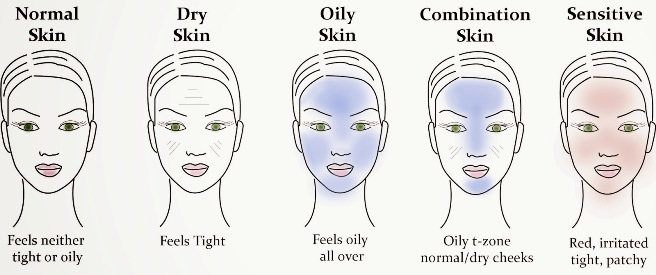
People with oily skin tend to have larger pores and get shiny or greasy looking skin in their T-zone, which is the forehead, down the bridge of the nose, upper lip, and chin. People with oily skin are prone to break outs, since larger pores can become clogged with dirt and oil, which can lead to blackheads and acne.
How to treat oily skin
One way you can treat oily skin, is by frequently using facemasks, using a toner, and moisturizer. It is important to use products that are oil free, so there is no excessive amount of oil buildup. Another thing that is important is to close your pores after using a facemask or taking a hot shower. Steam can open pores and how you can close them is by using cold water on your face or using ice afterwards, can help tighten up our pores. As far as facemasks go, clay masks are best to use for oily skin, because of its soaking properties.
Dry Skin
People with dry skin describe their skin as “tight” or “flaky”. Dry skin can occur for a number of reasons. One reason you may have dry skin is from the lack of moisture in your skin, for instance not using moisturizer after a shower or washing your face, or using the wrong one. Another reason may be the lack of hydration in your body, not having enough liquids or water throughout the day can result in dry skin. Sometimes washing your skin too many times can result in dry skin as well. According to Garnier, the number of times you should wash your face is one to two times a day.
How to treat dry skin
One thing you should always remember to do is moisturize. Use products that are moisturizing and limit the amount of time you spend bathing because that can also cause dry skin. Another thing to remember is to stay hydrated, drink lots of water and fluids throughout the day to avoid dehydration which can cause dry skin. Cold water can tend to dry out the skin, so you should always use warm water.
Combination Skin
Combination skin is when your oily in some areas of your face and dry in others. the T-zone which includes the forehead, nose, and chin, is often more oily than the other parts of your face. The cheeks are often dry and flaky.
How to treat combination skin
When your skin becomes oily, you should always blot away the excess oil. Exfoliating once or twice a week can help the drier areas of your face. Using products that are suitable for all skin types is a must so there is no interference with the different parts of your face. Always moisturize, but be careful about which moisturizer you use, depending on the ingredients and how well it will work with your skin type.
Normal Skin
Normal skin is when the skin is overall well balanced. The t-zone, which includes the forehead, nose, and chin, is usually a little oily which is normal but not excessively. Normal skin is also being well moisturized, not being too dry or too oily.
How to maintain normal skin
To maintain normal skin, you should always use SPF, hydrate the skin, exfoliate when needed, and use gentle products.
Sensitive Skin
Sensitive skin is when the skin becomes irritated easily, becoming itching, burning, having redness, and bumps, when a product comes in contact with the skin. There are a lot of products that can be harsh on the skin for people who have sensitive skin.
How to treat sensitive skin
Products with fragrance can be too harsh on the skin, so you should use fragrance free products, for instance soaps, oils, moisturizers, detergent, and more. Organic products can be very good for people who have sensitive skin.
 Faseeha Nasir